Learning can be serious and enjoyable.
Students work harder when they are curious. Games and strong visuals are teaching tools—not rewards added after the “real” learning.
I’m a piano teacher, resource creator, book author, and enthusiastic iPad user. The Paperless Piano Teacher grew from a simple idea: music teachers deserve materials that are practical, thoughtful, and ready for a real lesson.
After years of teaching intermediate and advanced students, I realized that my beginner and primer toolbox was the part that needed the most help.
I wanted resources that were clear without being dull, engaging without becoming busywork, and flexible enough to use on paper or an iPad. I also wanted materials that respected the depth of music study—from first notes and rhythm to history, harmony, analysis, and exam preparation.
When I couldn’t find those materials in the form I needed, I started creating them. A personal teaching solution became a growing collection of worksheets, games, planners, charts, books, sheet music, and tutorial videos for other teachers to use in their own studios.
Teaching while travelling and online made the value of a paperless setup especially clear. But “paperless” has never meant technology for its own sake. It means having the right resource ready when a student needs another explanation, a fresh challenge, or a way into a difficult idea.
A resource earns its place in the library when it makes something clearer, makes preparation easier, or helps a student stay engaged long enough for the learning to stick.
Students work harder when they are curious. Games and strong visuals are teaching tools—not rewards added after the “real” learning.
Good materials make the next step obvious. They organize difficult ideas without pretending that advanced music study is simple.
Many resources remain free because a practical worksheet should be available when it can make tomorrow’s lesson better.
Primer students deserve more than filler, and advanced students deserve more than a wall of text. The standard stays high across the learning arc.
What a worksheet is matters less than knowing when to use it, which student needs it, and what problem it is meant to solve.
Studio experience changes the work. Resources, explanations, and plans are revised when students show me a better way forward.
Experience supporting practical work, theory, history, harmony, technique, and exam preparation across the RCM learning path.
Years of one-to-one teaching with beginner, intermediate, and advanced students—in person and online.
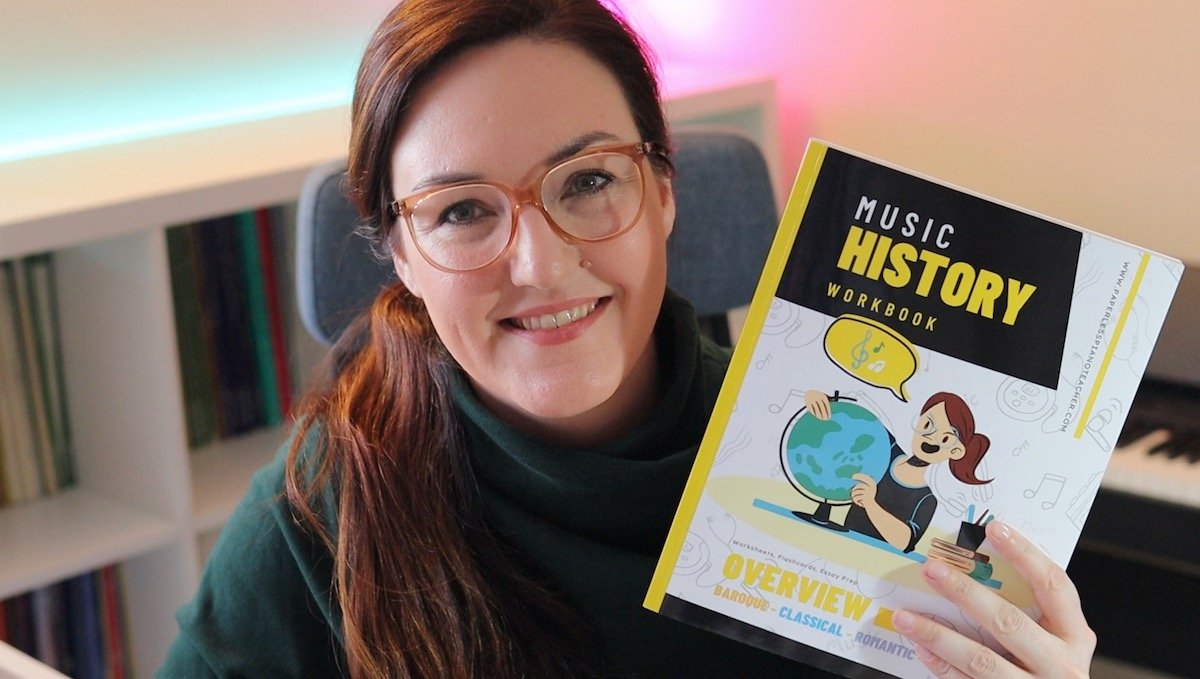
Physical collections include music-history and Synergy Method titles available through Amazon.
Browse the books ↗Free repertoire examples, technique walkthroughs, history, harmony, and theory explanations.
Watch the tutorials ↗I take on a small number of private students. If you are looking for individualized instruction, include the student’s age, current level, location, and whether you are interested in online or in-person lessons.
Ask about lessons →Browse the resource centre for printable materials, or visit YouTube for longer explanations and teaching demonstrations.