
Burgmüller's Ballade is one of those pieces that makes students feel like storytellers. The repeated notes are dramatic, the C-major middle arrives like a sudden change of scene, and the return to C minor is unmistakable. Beneath the excitement is a carefully focused study in repeated-note control, balance, quick character changes, and maintaining momentum without tightening up.
- Composer
- F. Burgmüller
- Work
- Op. 100 No. 15
- Key
- C minor
- Form
- Ternary
- Tempo
- Allegro con brio
- RCM
- RCM Level 4
A study that tells a story
Ballade is No. 15 in Burgmüller's 25 Études faciles et progressives, Op. 100. The collection pairs technical development with descriptive titles and Romantic character. This piece appears in the current RCM Level 4 Etudes book.
A ballade suggests storytelling, but Burgmüller did not provide a detailed plot for this one. That leaves teachers and students free to invent a scene. The score gives us excellent story clues: urgent C minor, forceful repeated notes, a contrasting C-major episode, sudden dynamic changes, and the dark material's return. If you haven't yet experienced Schubert's Erlkönig, there's a YouTube video set to an animation that can offer a similar visual for the C minor section of this piece.
The repeated notes, crisp releases, coordination, and dynamic control are the technical lesson. The title and contrasting sections give those skills a musical purpose. Students should never have to choose between “correct technique” and storytelling here; each supports the other.
A clear ternary map
- A — C minor: the opening establishes an urgent, rhythmic character through repeated notes, sharp contrasts, and clear cadential punctuation.
- B — C major: the middle changes colour. The key brightens, the texture becomes more lyrical, and the phrase needs space without losing the underlying pulse.
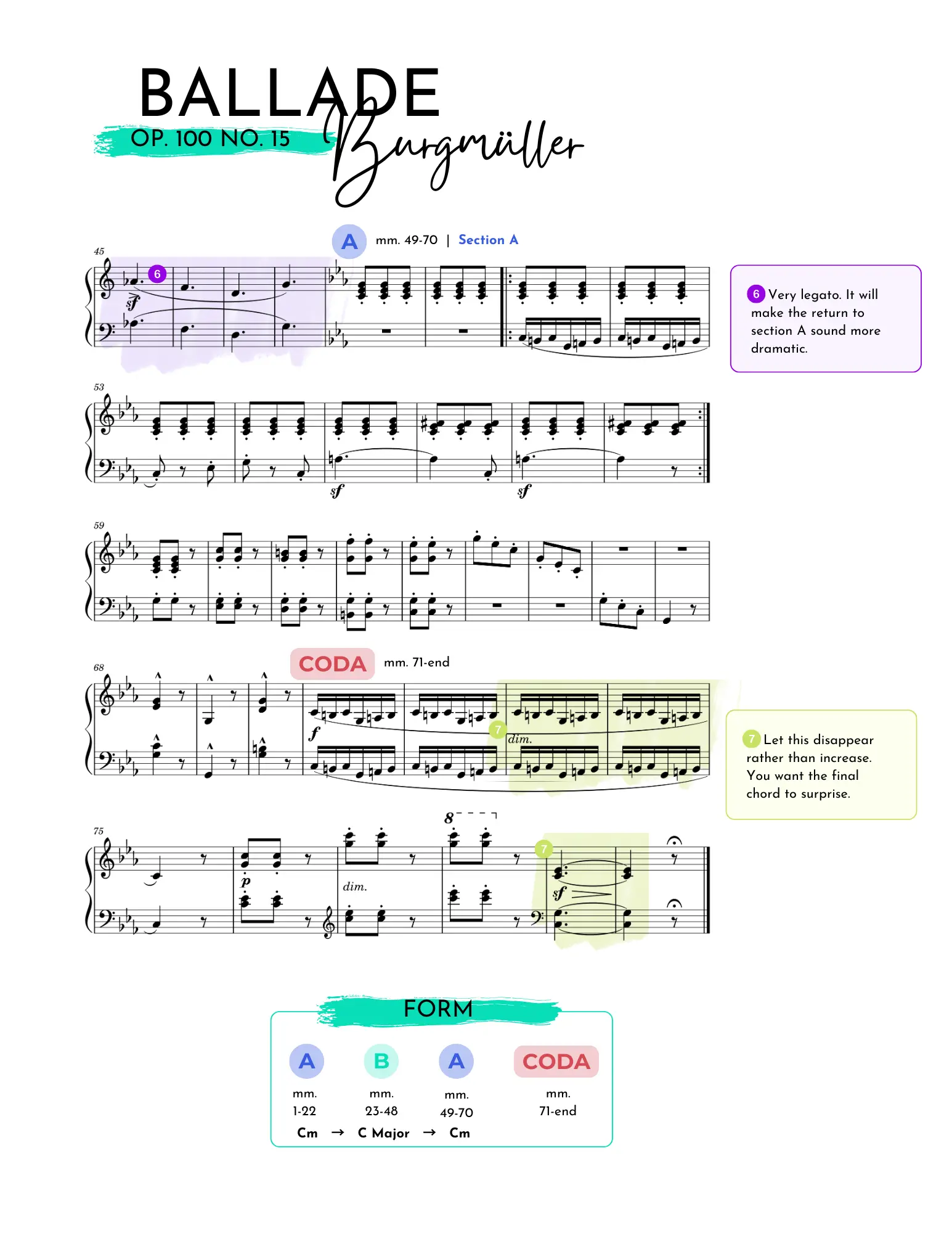
- A — C minor returns: the opening drama comes back. Familiar material now feels like the story's consequence rather than a fresh beginning.
- Closing gesture: the final cadential writing confirms C minor decisively.
Section by section
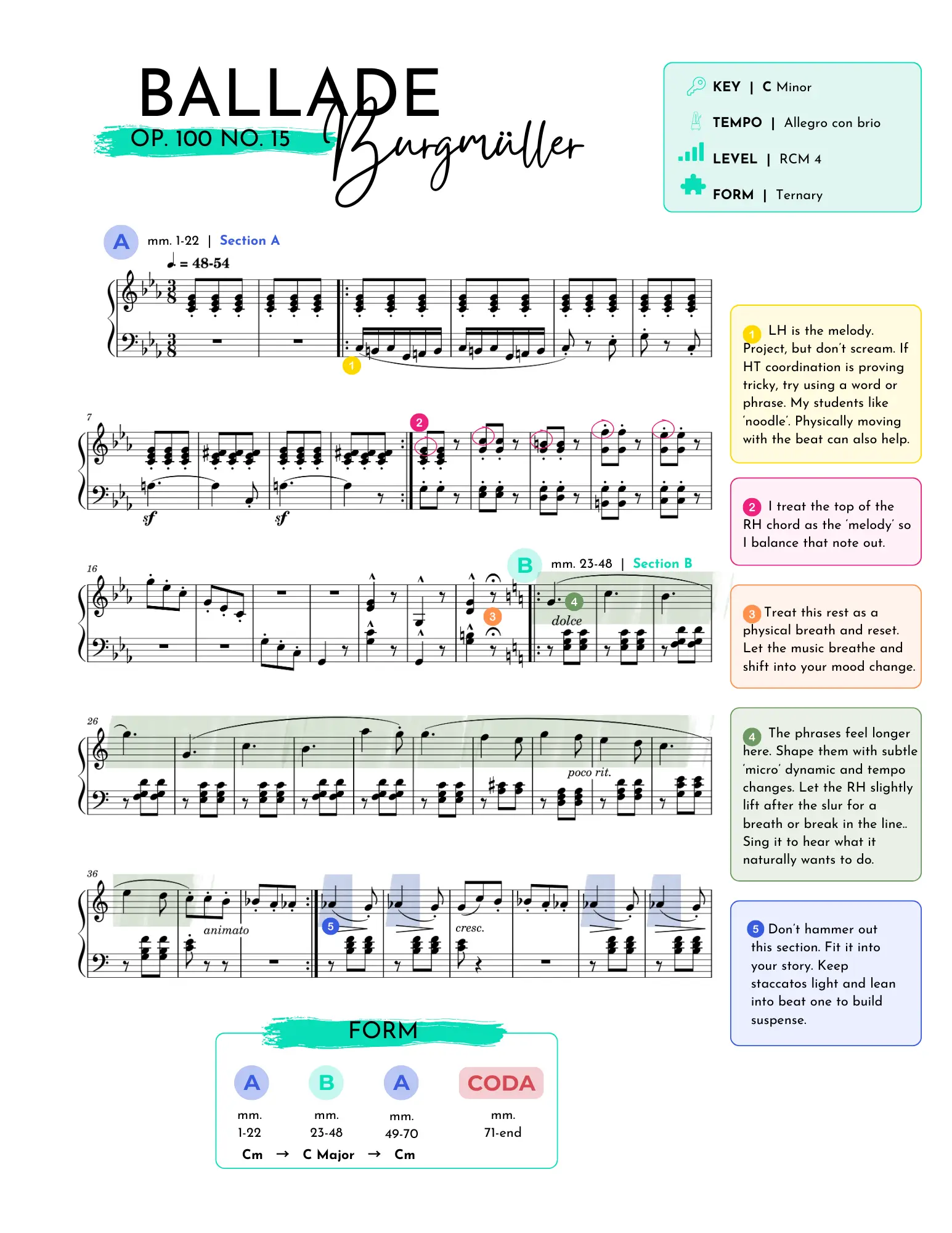
The opening. The C-minor material should feel alert from its first gesture. Repeated notes provide the energy, while accents, rests, and cadences organize that energy into sentences. Your left hand should sing out over the right hand for the first 10 measures. Some students struggle putting it together. I had a student sing "noodle, noodle, noodle" and that stuck.
The major-key contrast. C major is not merely “the easy middle.” It changes the atmosphere and asks for a more singing line. Students often slow too much here or continue with the opening's heavy touch. Keep the pulse alive while changing tone, balance, and articulation. Switch the balance and let your right hand project in this section. I often have students sing it so they can develop longer, legato phrases. The transition requires a lot and can be rushed. I like students to visualize Tom and Jerry here - they're sneaking around each other, not chasing.
The return. The C-minor idea is recognizable, so the main question becomes: what has changed? A student can make it more urgent, more inevitable, or more distant before the decisive ending. That choice is interpretive.
The emotional arc: an interpretation
Everytime I pick this up, I hear Tom and Jerry. The C minor opening offers the initial chase. When you must land on those A naturals, its like Tom getting hit with something - the mouse trap, the wall - you pick. As we move into C Major, there's peace in the house. Tom's enjoying a nice lunch or a relaxing spa moment. Maybe whistling as he moves. But not for long. Jerry starts sneaking around him until the chase begins again.
A student may hear an argument, a storm, a mysterious visitor, or a scene from a favourite book. Ask them to name what changes when C major arrives and why the return matters. Their story should make the structural contrast easier to hear.
Repeated notes without tension
- Release before repeating. A repeated note cannot reset if the finger remains pressed or the hand stays rigid. Practise tiny groups with a quick release after each sound.
- Use a flexible wrist. Let a small forearm-and-wrist rebound help the fingers. The motion is compact, not a large bounce.
- Stay close to the keys. High fingers waste motion and encourage harshness. Crisp does not mean struck from above.
- Practise in bursts. Two or four repeated notes followed by complete rest teach the hand what relaxation feels like.
- Build speed after coordination. A tense slow pattern becomes a tense fast pattern. Find the easy movement first.
Balance, rhythm, and character
- Give each hand a role. Practise the left hand alone at the intended dynamic, then add the right hand above it. Accompaniment must provide pulse without covering the story.
- Keep momentum through rests. Silence belongs to the rhythm. Count through it so dramatic breaks do not become accidental hesitations.
- Exaggerate contrasts in practice. Make the minor and major sections obviously different in touch, colour, and dynamic plan; refine the result later.
- The pedal debate. I don't use much if any in this etude. I don't think it needs it, and it forces students to articulate with clarity rather than hide with pedal. That being said, you could experiment with touches of pedal to assist with dynamic contrasts rather than legato lines. Early learners often think the pedal's only use is to connect things. This can be a good etude to test out its use for assisting with dynamics and opening up the sound.
Ballade Analysis (Printable)
A print-ready copy of the colour-coded form map to keep in the studio or hand to a student.
Sources and further reading
More Burgmüller teaching ideas
Continue through Op. 100 with Burgmüller's Arabesque: analysis and teaching tips, or browse all piano analyses.